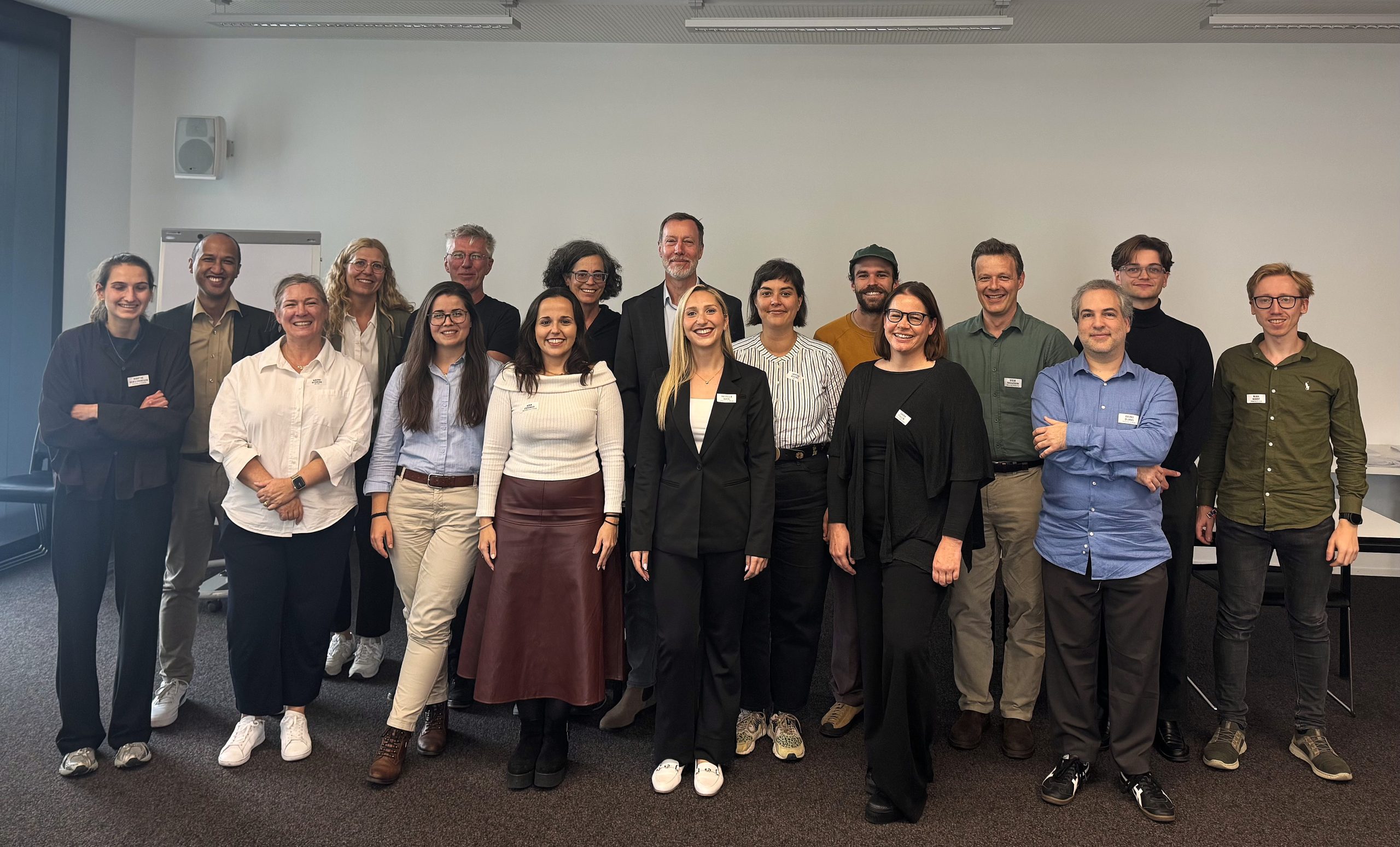
On October 2nd, 2026, the University of Fribourg organized a Knowledge Exchange Workshop “Bridging Research and Practice on AI & Recommender Systems”. The workshop brought together researchers from the ALGEPI project with representatives from media and policymaking in Switzerland. It aimed to discuss results on the use of AI and recommender systems by media organizations and to brainstorm learnings and insights from the ALGEPI project for public and private media.
The workshop was preceded by an internal ALGEPI consortium meeting on October 1st, where consortium partners discussed current research activities. The day concluded with a tour of the historic city of Fribourg and a joint dinner, providing an opportunity for informal exchange and strengthening collaboration across the different fields.
The Knowledge Exchange Workshop opened with a welcome from Manuel Puppis (University of Fribourg), followed by a series of presentations highlighting recent ALGEPI findings and their implications for media organizations.
- Bruno Lefèvre (Université Libre de Bruxelles) explored the ethical and organizational challenges of AI integration in newsrooms, highlighting the opportunities and tensions that arise when news organizations adopt AI technologies.
- Michelle Kulig (University of Fribourg) and Steve Paulussen (University of Antwerp) presented research on epistemic agency in media recommendations, focusing on the relationship between users’ preferences and organizational practices.
- Bruno Dumas (University of Namur) and Célina Treuillier (University of Fribourg) presented insights on algorithmic transparency and metrics display, drawing on experiences from the literary and media domains.
- Emine Ozge Yildirim-Vranckaert (KU Leuven) connected the ALGEPI project’s conceptual work on epistemic welfare with questions of rights and responsibilities, asking what the right to epistemic welfare requires from media recommender systems.
The research presentations were followed by responses from journalism and policymaking. Alexandra Stark, expert for AI in journalism, reflected on the findings from the perspective of current developments in news organizations, while Thomas Häussler, media specialist at the Federal Office of Communications (OFCOM), brought a policy perspective to the discussion.
The second part of the workshop shifted the focus from research findings to their practical implications. Manuel Puppis introduced three key insights from the research project and how they could translate into practical recommendations for media’s use of AI and algorithmic recommender systems. Participants then engaged with these recommendations in interactive small-group discussions focusing on which insights are most useful and realistic for media organizations and which would benefit from more precision. The subsequent plenary exchange, moderated by Michelle Kulig, provided an opportunity to bring these different perspectives together. Participants for instance reflected on:
- the responsibility for the use of AI and recommender systems within media organizations and newsrooms;
- the gap between stated user needs and actual behavior;
- ways to strengthen media trust while exploring technological innovation;
- limits to realizing epistemic welfare by design for commercial media.
Overall, the Knowledge Exchange Workshop highlighted the importance of bringing research, media practice and policymaking into dialogue. Such exchanges are central to ALGEPI’s aim of developing knowledge that can contribute to the responsible design and use of algorithmic media environments. It provided an important opportunity to reflect on how AI and recommender systems can be designed and implemented in ways that meaningfully promote epistemic welfare in practice.